
Journeys
To be completely honest, I was initially uncertain how to customized a single piece of hardware. Setting up and operating a home server demands a much steeper learning curve rather than simply building a basic Nodejs application. Consequently, I have spent considerable time contemplating the entire process, including pre-purchase phase and an eternity of mental deliberation in my blackbox head just for deciding what the first "magic blessing" is on my tiny local ecosystem. The adventure was silent but there are a lot of stories that came from this quest.
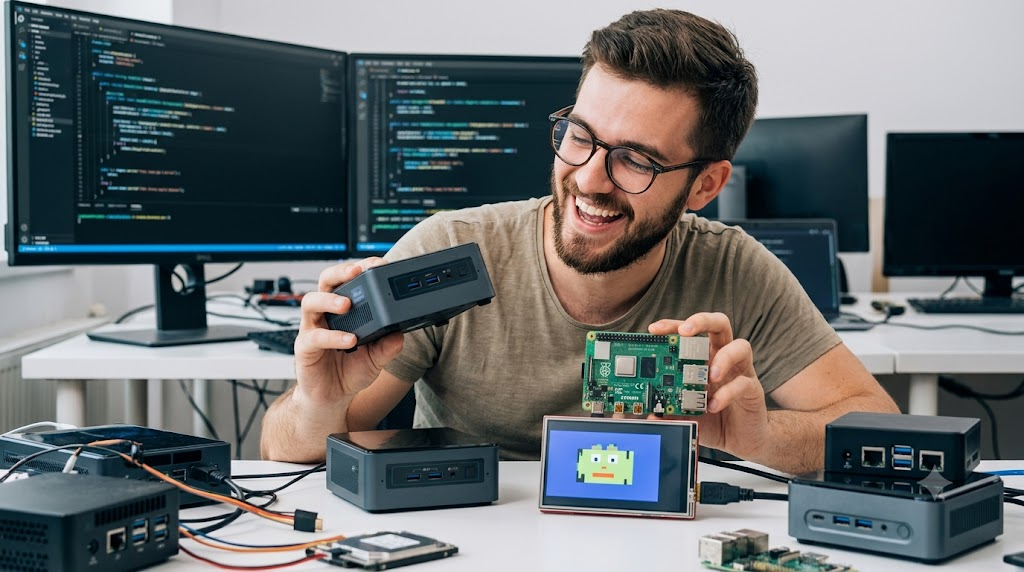
In fact, since I found my final month of salary had already passed, many of my subscriptions became redundant and financially burdensome, meaning they had to be rationalized. Taking a pragmatic engineering approach, I decided to purchase this:
While this compact unit isn't a futuristic sci-fi machine, it packs all the essential capabilities on would expect:
Although my intention was to create new AI Assistant that can locally run on my desk, I relied on AI to guide me through most of the installation stages. This immediately reminded me about Tech-Priest in Warhamer 40k who anoints the machinery with holy oil and prays to the Machine Spirit . The process went surprisingly quickly, I simply asked ChatGPT how to install Ubuntu, showing it my screen through my IPhone camera.

After that, I quickly customize my mini pc with these points:
Yes, you can easily notice that I have only listed a few items here. The only difficulty (I'm a non-native English speaker) is using an academic voice to describe them.
The way the world is built is based on very simple concepts. We have a lot rules to operate massive IT infrastructure but they are always simple at the beginning. Take the OSI model, for example, this model is just a model and no more. OSI model doesn't contain any high tech theory or magical things that require someone having PhD degree to be able to explain this. Yet, everything you know on the internet is already follow this framework down to a single layer. In conclusion, if you have a feeling that this Software Engineering field is too abstract or too complicated for you, remember that every algorithm always starts from simple math: 1 + 1 = 2.